All posts by: admin

FLAMENCO

Videoinsight Foundation – ets

In line with its mission of  promoting the care of physical and mental well-being,  it launches a new initiative dedicated to the integration of Art and Health: FLAMENCO. Open Call for Digital Artists 2026.

Flamenco is an emotional ecosystem, a philosophy of life, a profound artistic expression of human identity, declared an “Intangible Heritage of Humanity” by UNESCO. Born in Andalusia, it is the result of a centuries-old and fascinating crossroads of cultures.

It is distinguished by its psychological impact, by the type of  insight  it fosters in the audience. It expresses the full range of human passions: the different  palos  (styles) have unique compás  (rhythms), specific nuances of feeling. There are over 50 types of  palos , each with its own musical scales and emotional intentions. The essence of flamenco is the duende, described by Federico García Lorca as a “mysterious power that everyone feels and no philosopher explains.” It is the magical moment of “supreme insight,” in which the artist and the spectator enter a state of “emotional trance.” It is the instant in which art ceases to be fiction and becomes absolute truth, capable of healing and transforming those who experience it. Flamenco converts suffering into beauty and rhythm, teaches us to remain in pain and then free ourselves from it through art; it does not allow masks, it catalyzes authenticity, and elevates the spirit. 

The FLAMENCO project aims to realign the viewer’s emotional and psychophysical frequencies through an alchemy of the senses. It was conceived as a  “healing” device : through the  immersive synergy of vision, hearing, and smell , it invites visitors to cross the threshold of  looking  and enter the realm of  healing.  The art exhibition is conceived as a  multisensory journey , a  chamber of awareness  in which to experience a triad of stimuli: – the image (the focus), a highly transformative work of digital art capable of activating “mirror neurons” and stimulating the internal world;  – the music (the rhythm), a sound texture designed to resonate heart and brain frequencies, facilitating deep relaxation and energetic activation;  – the scent (the memory), a fragrance diffused into the air that bypasses the rational mind to directly impact the limbic system, reawakening ancestral memories and stimulating a physiological response of well-being.

The ultimate goal is to promote psychophysical health through art that provokes emotion and insight.  In the artistic space, the integration of the senses acts as a catalyst for 

– emotional catharsis: the release of accumulated tensions through identification with the work of art; 

– resilience: the strengthening of healthy psychological resources through an all-encompassing aesthetic experience; 

– insight: the sudden and illuminating understanding of internal dynamics. 

Art is not an object to be admired, but a mirror to behold. The viewer is not a passive visitor, but the protagonist of a  process of healing and awakening.

The healing image  isn’t aesthetically beautiful, but it’s functional: it acts like a  visual medicine  that interacts with the nervous system and the unconscious; it evokes insight, it’s the vehicle for making vital force visible. It contains narrative; it’s not static or decorative, it embodies internal movement (an action, an evolution, a momentum, a conflict that resolves itself). It includes an archetype: it evokes universal symbols recognizable by the collective unconscious, transcending linguistic and cultural barriers (light conquering shadow, the path, rebirth, the embrace). It evokes openness: it leaves room for interpretation, allowing the spontaneous projection of internal experiences. If it represents a gesture of liberation or strength, the viewer’s brain, due to the activation of mirror neurons, simulates that gesture, biochemically producing a feeling of  empowerment.  It evokes empathy: it allows one to “feel inside” the work, transforming observation into an internalized experience. It balances tension, resolution, transformation, dynamism (it represents the transition from chaos to order, from pain to resilience), and catharsis (it embraces the viewer’s discomfort to offer a symbolic escape). It contains colors and light with a strong impact on the endocrine system and the circadian rhythm: light suggests hope, orientation, intuition, and enlightenment; chromotherapy activates energy, strength, and passion through warm tones, calms anxiety, and promotes deep reflection through cool tones. It stimulates emotional resonance; it includes what Roland Barthes called a “punctum “:  a detail, a “wound,” or an unexpected element that strikes the viewer, breaking down their defenses and allowing the emotion to flow. It possesses “duende”: that internal fire that forces the soul to react and get back on track. The threshold functions as a portal: one enters one way and exits another.

Healing music isn’t just background music, but a vector of emotional impact, a physiological regulator. To ” awaken the soul ,” sound must act on multiple levels: biochemical, cellular, and psychological. It must: 

– exhibit  entrainment  , a coherence of biological rhythms; the heart and brain waves must be able to synchronize with the external rhythm; 

– optimize heart rate; to induce relaxation, it should start at a moderate tempo and gradually slow down; to awaken vital energy and counteract apathy, it should contain a rhythmic crescendo; 

– stimulate brain waves with frequencies that promote conscious relaxation (alpha) and deep introspection (theta); 

– be dynamic, narrate, evoke, express tension (pain, blockage) and then lead the listener towards a harmonious resolution (this process mirrors the mind’s ability to overcome trauma). 

The alternation between soft and loud should stimulate attention and prevent habituation, keeping the soul “awake .” There are specific frequencies associated with healing: 

– 528 Hz: the “miracle frequency” or DNA repair frequency, connected to transformation and peace; 

– 432 Hz: a natural and coherent attunement to the frequencies of the universe and the human body, which promotes feelings of centeredness and profound well-being. 

Healing music creates an immediate empathic connection and reduces feelings of loneliness; it avoids chaotic structures or excessive dissonance that could induce stress or anxiety (cortisol). It soothes the nervous system, surprising and moving. Low frequencies, physically “felt” in the chest or abdomen, help ground the experience in the body (somatic vibration). The primal rhythm reactivates vital force and willpower (resilience); the flowing harmony reduces cortisol levels and stress-induced inflammation; the evocative melody stimulates the release of dopamine and oxytocin; the strategic silence of pauses allows insight to settle in consciousness.

 healing perfume  is not a simple accessory, but the quickest way to access the unconscious. It aims to awaken the soul and promote psychophysical well-being. Unlike sight and hearing, smell is the only sense not filtered by the thalamus: it reaches directly the limbic system, the seat of emotions and analogical memory. To promote healing, the fragrance must possess purity and authenticity: it must be based on natural essential oils, not flat synthetic molecules. Essential oils extracted from living plants retain a molecular complexity that interacts chemically with the body. The soul recognizes the truth: a natural perfume evokes a connection with the earth, a fundamental pillar of psychophysical well-being. A healing perfume must act as an activator of positive or ancestral memories, evoking a journey through time. Root notes (vetiver, patchouli)  provide grounding, helping the wearer feel solid and secure, counteracting psychic fragmentation. Hints of vanilla, citrus, or sweet resins—”childhood notes”—awaken the inner child, promoting a sense of protection and emotional nourishment. The perfume should have a dynamic olfactory pyramid: “top notes” (incense or citrus) to clear the mind of everyday thoughts and open the door to insight; “heart notes” (floral or spicy) to touch the emotional sphere and openness; “base notes   (woody) to give depth and persistence to the experience, allowing well-being to last over time. The fragrance should be neurostimulant, acting as a neurological anchor, inducing stress relief (notes like bergamot or sandalwood reduce cortisol levels), soul awakening (frankincense or myrrh are linked to spirituality, deepen the breathing, and predispose to meditation and deep reflection), and vital energy (black pepper or ginger stimulate determination and fortitude).

Associating a specific fragrance with an image and a piece of music allows the viewer to capture the insight they’ve received. In the future, smelling that scent again will immediately reactivate the state of well-being experienced during the exhibition. Olfactory insight is the alchemy that transforms air into pure emotion.

Requirements and Procedures for Participation: participation is open to  Digital Art  artists who wish to explore the theme of   Care” through the language of Art. 

Type of Works : Digital Art 
Characteristics : Video or NFT with music, color, variable duration 
Required Material : High-resolution video or NFT with caption 
Applications : by email – rebecca.russo@fasv.it 
Deadline : 06.30.2026 

All submitted works will be evaluated by a multidisciplinary jury. The winning work will be featured in the FLAMENCO exhibition.

We invite you to follow us on our  Instagram page .

The  Videoinsight Foundation – ets team

Copyright © 2025 Videoinsight Foundation – ETS. All rights reserved.

Stati Generali della Salute di Siena 2026


Stati Generali della Salute di Siena 2026

Complesso Museale di Santa Maria della Scala – Cappella del Manto

March 12, 2026, 9:30 a.m. – Press Conference

Discussion and dialogue between institutions, healthcare professionals, academia, experts and the public. The goal is to explore the main issues related to health, mental and physical well-being, and innovation in healthcare.

Rebecca Russo, President and Founder of Videoinsight Foundation – ets, has been invited by Siena’s Health Councilor Giuseppe Giordano to present the ongoing project “VideoAsp”: Video Art in RSA / RA (Public Personal Services Companies) opened in 2025 at @asp.siena (President: Guido Pratesi. Management: @roccolerose73), in collaboration with Videoinsight Foundation – ets and Galleria Fuoricampo. She will share with participants the results, progress, and concrete insights related to the first case of integration between Video Art and Health in RSA / RA.

CAREGIVER

The World Health Organization recognizes art’s key role in health prevention, psychological support for managing chronic diseases, and improving quality of life.

Videoinsight® Foundation – ETS, in line with its mission of promoting care for physical and mental well-being, is excited to announce the launch of a new initiative dedicated to the integration of art and health: CAREGIVER. Open Call for Emerging Artists 2026.

Caring

Art connects the internal world and the external reality, acting as a powerful therapeutic tool for healing the soul. It plays an active role in health prevention. It activates cognitive, emotional, and social processes that can reduce anxiety, isolation, and depression. It strengthens self-esteem, elevates mood, reduces vulnerability, and promotes mental and physical well-being.

Through the Open Call, artists are invited to explore the concept of “care,” not only as a gesture of care, but as a human, social, and therapeutic attitude.

Art itself becomes a “Caregiver”: it welcomes, transforms, and regenerates.

Caring is an expression that encompasses a deeper meaning than simply “assisting” or “curing.” While “cure” refers to the technical and medical aspect of curing an illness, “to care” concerns the person as a whole; it presupposes presence (being there), listening, empathy, responsibility (taking charge), protection, and support.

Caring is not just performing tasks. It is an act of conscious presence. It means recognizing the other not as a “patient” or a “problem to be managed,” but as a person with a history, desires, and dignity that remain intact despite the illness.

Caring means “looking into the eyes,” identifying unexpressed needs: the fear behind a silence, the desire for normalcy behind a complaint. It is the ability to tune into the other’s state of mind without being overwhelmed, creating a safe space where the person being cared for still feels “seen.”

Caring means taking charge of the other’s world; it is an act of protection that aims to preserve the person’s remaining autonomy. Caring also means making difficult choices for those who can no longer make them, always acting in their best interests. There are two ways of Caring: replacing the other (“doing for”), as removing all burdensome tasks, but risking erasing the identity of the person receiving help; or standing alongside the other (“doing with”), helping the person do what they still can, supporting them where they cannot. This is the true heart of care: restoring power and dignity.

Caring is the art of staying. It is the patience to inhabit another’s time, which often slows down our own, and to transform a moment of fragility into a space of profound human connection.

Who is a Caregiver?

Caregiver, “he or she who provides care,” means fulfilling one of the noblest, most complex, and often invisible roles in our society. It doesn’t mean performing a task, but rather enacting a profound intertwining of practical assistance, emotional support, and constant dedication to another person. The Caregiver is the silent pillar that allows thousands of people to live with dignity despite illness, fragility, and loneliness. The role requires patience, courage and generosity; it deserves gratitude, rights and concrete support. The Caregiver’s life is the beating heart of self-help welfare; it is a constant balance between dedication and sacrifice. Caregivers, “family heroes”, are too often left alone.

Daily Challenges

The burden placed on Caregivers shoulders is not only physical, but above all psychological. The main challenges include: social isolation (Caregivers often give up their social life, hobbies, and sometimes even their careers to ensure their constant presence); emotional burden (managing a loved one’s physical or cognitive decline leads to anticipated and constant grief); physical fatigue (lifting, dressing, managing sleepless nights and medical emergencies); bureaucracy (navigating permits, benefits, and healthcare waiting lists is an added burden).

The Risk of “Burnout”

Many Caregivers fall into the trap of neglecting themselves, abandoning themselves to care for others, resulting in psychological and physical distress. “Burnout syndrome” manifests itself with exhaustion, feelings of over-responsibility, sadness, helplessness, irritability, anger, and guilt. These are the symptoms of Caregiver burnout: fatigue, difficulty concentrating, sleep, appetite, and mood problems, anxiety, psychosomatic disorders, weakened immune defenses, reduced self-care, social isolation, and depression. To care for someone else, you must first be able to feel good yourself.

Key Numbers and a profile of the Caregiver in Italy

In Italy, the number of Caregivers is impressive and reflects how our social welfare system relies almost entirely on families. According to the most recent data updated at the beginning of 2026, based on ISTAT and Censis surveys, the situation is as follows: 8 million people is the overall estimate of family Caregivers. This represents approximately 15% of the Italian population.

Over 70% are women, known as the “sandwich generation,” squeezed between caring for their children and their parents. The most affected age group is between 45 and 65, but approximately 17% are under 35 (so called Young Caregivers). Approximately 30% of Caregivers dedicate more than 20 hours a week to caregiving. Approximately 60% have had to change or leave their jobs to provide care.

Legislative Updates

Public debate is finally highlighting the need for legal and social security protections for Caregivers. Recognizing their value means ensuring psychological support, legal and financial protections, and “relief” services (facilities that temporarily house the patient to allow the caregiver to rest).

In January 2026, the Council of Ministers approved a new bill aimed at finally giving legal status to these professionals. The goal is to transform Caregivers from “volunteers out of necessity” to state-recognized individuals, with the introduction of social security and insurance benefits, bonuses and incentives for balancing work and life. In Italy, the economic value of the work performed unpaid by Caregivers has been estimated at tens of billions of euros each year; without them, the National Health System would risk immediate collapse.

Caregiver’s Disease

You can’t care for others authentically and lastingly unless you learn to care for yourself. The Caregiver who vanishes is no longer “caring”; he or she is consuming themselves.

The Caregiver’s paradox is that, in attempting to protect another’s health, they end up consuming their own. There is specific medical literature on this phenomenon, called “Caregiver’s Disease” or “Caregiver Burden.”

The Caregiver’s body and mind are subjected to chronic stress that alters normal biological processes. The main causes are: hypercortisolemia (constant stress maintains high levels of cortisol, the stress hormone, which in the long run weakens the immune system); sleep deprivation (frequent nighttime interruptions impede physical and mental recovery); and self-neglect: the Caregiver tends to avoid medical appointments, eat irregularly, and stop exercising. Illnesses that affect Caregivers include psychosomatic and mental disorders, such as depression and anxiety (affecting between 40% and 70% of Caregivers); burnout syndrome (an emotional exhaustion that leads to detachment, irritability, and a sense of failure); chronic insomnia (difficulty falling asleep even when the Caregiver is resting, due to hypervigilance). Caregivers also develop physical conditions, such as musculoskeletal disorders (chronic back pain, hernias), cardiovascular diseases (hypertension is very common due to constant emotional tension), immune deficiency (Caregivers take longer to recover from flu or injuries). It is crucial to recognize the “warning signs” before they become chronic conditions: chronic fatigue, loss of interest in daily activities, disproportionate anger followed by strong feelings of guilt, difficulty concentrating, and memory lapses.

What can be done to support caregivers?

To support Caregivers it’s advisable to plan respite care (delegating care, even for just a few hours a week, to professionals or other family members); participate in self-help groups (conversing with others experiencing the same situation dramatically reduces feelings of isolation); experience art and culture (effective for relaxation, mental regeneration, and creativity development).

CAREGIVER. Open Call for Emerging Artists 2026

Requirements and Procedures for Participation

Participation is open to all artists who wish to explore the theme of “Care” through the language of art.

Artists are invited to submit original artworks on the theme of “CAREGIVER.”

Artwork Type: Paintings.
Maximum Dimensions: 100 x 100 cm.
Required Materials: High-resolution image of the artwork with full caption (title, technique, year, dimensions).
Submissions: Proposals must be sent by email to: rebecca.russo@fasv.it

Deadline

The deadline for submitting artworks is June 30, 2026.

Selection and Group Exhibition

All submitted artworks will be evaluated by a multidisciplinary jury. The selected works will be exhibited in the “CAREGIVER” exhibition, an event that will highlight the talent of the participants and the ability of art to foster psychological, physical, and social well-being. The time and location of the exhibition will be announced after the selection of the artworks.

Amani Bodo

Rebecca Russo, in the context of Roma Arte Nuvola, has acquired, for the Videoinsight® Collection, the work by Amani Bodo “Mamiwata” 2025, acrylic on canvas, 134 × 124 cm, Galleria Primo Marella, Milan, Lugano

Palazzo Rota, Venice

Healing Art meets the heart of Venice

We are pleased to announce a new, extraordinary synergy between the Videoinsight Foundation – ets and the Pacini Group.

The union between the Foundation’s mission and the excellence of hospitality has given rise to an unprecedented initiative: a permanent Videoart Exhibition within the magnificent spaces of Palazzo Rota in Venice.

Just a few meters from the majesty of Piazza San Marco, Palazzo Rota – Luxury Apartments, a 14th-century residence restored to its former splendor by the Pacini Group, has opened to the public. The historic building, protected by the Superintendency, is now home to exclusive residences, designed for travelers seeking an intimate and sophisticated experience.
Palazzo Rota combines the charm of history with contemporary comfort. This elegant Venetian residence is a harmonious fusion of history, aesthetics, and belonging. The restoration project, designed by Studio Marco Piva of Milan, honored the palace’s history: originally a textile factory, then a glassworks, a museum, and finally a noble residence. Each transformation has left its mark, making the building a precious testament to Venetian heritage.

A dialogue between history and modernity

Set within the timeless architecture of one of the lagoon’s most captivating palaces, the Videoinsight® Collection finds a new home. The apartments of Palazzo Rota are not just places to stay, but spaces for interior transformation where video art takes center stage.

The immersive experience

The works of art offer a one-of-a-kind sensory journey.

Thanks to the collaboration with Pacini Group, Art transcends traditional frameworks to become an integral part of living:

  • evocative power: each video is chosen for its ability to activate psychological resources and stimulate psychophysical well-being;
  • total immersion: the harmony between the fine furnishings and the artistic projections creates an atmosphere of profound emotional resonance;
  • the Videoinsight® Method: guests and visitors can experience the beneficial value of images in a context that exalts beauty and silence.

Palazzo Rota: an exceptional setting

Venice, a city of art par excellence, welcomes these permanent installations, confirming its position as a hub of contemporary experimentation.

The presence of Videoinsight Foundation – ets at Palazzo Rota marks a fundamental step in the dissemination of Art as a tool for health and awareness.

We invite you to discover this new chapter of beauty and healing in the beating heart of Venice.

Special thanks to:

Emidio Pacini – Founder & CEO Pacini Group

Monica Bassetto, General Manager The Venice Times Hotel

Rebecca Russo, Founder & President Videoinsight Foundation – ets

Artworks:

Beatriz Millar, Lux Mater, 2011, Videoinsight® Collection

Hans Op De Beeck, Parade, 2012, Videoinsight® Collection

Alejandro Pereda, A Glass of Fruit, 2016, Videoinsight® Collection

Marinella Senatore, Speak Easy, Director’s Cut, 2009, Videoinsight® Collection

Fabrizio Passarella, Il Giardino Rabescato, 2003-2016, Videoinsight® Collection

Fabrizio Passarella, Sogni, 2022-2025, Videoinsight® Collection

Calle dei Fabbri 834 – 30124 Venezia 

Flashback Habitat

Butterfly – Notebook

Butterfly

Flashback Habitat. Ecosistema per le culture contemporanee

in collaboration with Videoinsight Foundation – ets

Butterfly by Rebecca Russo
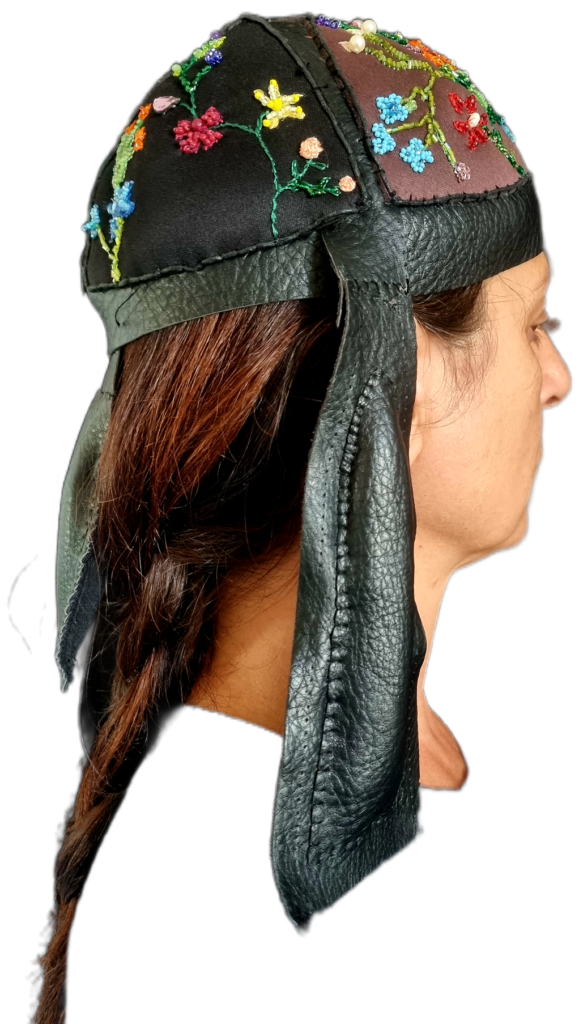
VideoArt from Videoinsight® Collection

25.09.2024 – 30.03.2026

25.09.2025 | Talk by Tita Giunta

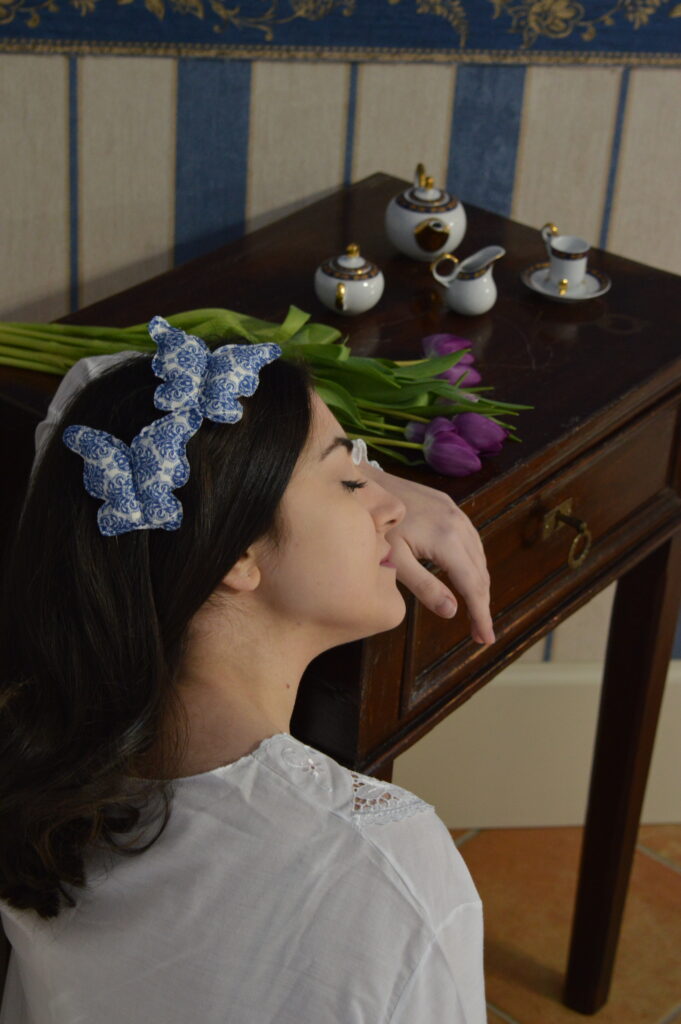
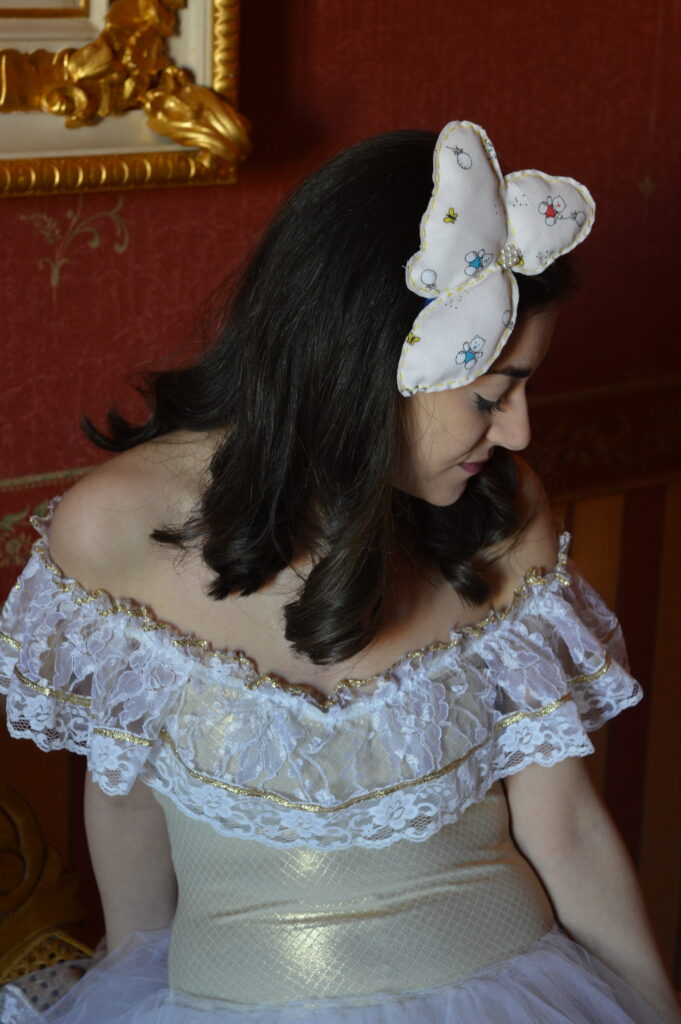
The butterfly is one of the most powerful and universal symbols of transformation, rebirth, and inner beauty. Its life cycle—from egg to larva, then to chrysalis, and finally to winged creature—represents a profound process of change and growth. It symbolically represents the soul, the passage between worlds, between life and death, between darkness and light. It is associated with freedom, the lightness of being, but also with fragility and impermanence, since its existence is brief but intense, like certain precious moments in life. The butterfly invites us to let go of the past, to accept change, and to have the courage to evolve. It reminds us that even what appears immobile or dark (like the chrysalis) can contain the seed of something wonderful. Human wounds, however painful, can become wings for soaring flights of emancipation and awareness, openings through which light enters. Every pain experienced, every fall, every loss leaves a mark, which is not just suffering: it is also memory, experience, truth. Limitations, losses, cause cracks, within which the possibility of transformation hides and reveals itself. Fragility inspires authenticity, strength, and radiance. Failure, faced with awareness, can become compassion, depth, art. Scars tell a story: they are not a flaw, but a form of beauty, truer. Vulnerabilities can transform into resources: becoming sensitivity, the ability to understand others, the desire for authenticity. The butterfly is poetry in motion, a silent messenger of hope, transformation, and new life.
Artworks:

Janet Biggs, Can’t find my way home, 2015, 09 min. 45 sec.

Maurizio Camerani, Sub, 1994, 06 min. 06 sec.

Emilia Faro, The Prince’s metamorphosis, 2010, 03 min. 29 sec.

Michael Fliri, Getting too old to die young 2008, 00 min. 47 sec.

Kate Gilmore, My love is an anchor, 2004, 07 min. 06 sec.

Goldiechiari, 1969, 2010, 04 min. 23 sec.

Vlatka Horvat, Restless, 2010, 08 min.18 sec.

Polina Kanis, Eggs, 2010, 17 min.28 sec.

Ali Kazma, Dance Company, 2009, 10 min. 17 sec.

Edson Luli, What is man, 2014, 06 min. 55 sec. 

Marcos Lutyens, The subjective self: twinnapse, 2013, 01 min. 40 sec.

Ursula Mayer, The crystal gaze, 2007, 14 min. 39 sec. 

Marcello Maloberti, Blitz, 2012, 07 min. 58 sec. 

Masbedo, Glimà, 2008, 18 min. 26 sec.

Hans Op De Beeck, Parade, 2012, 11 min. 17 sec.

Fabrizio Passarella, Il Giardino Rabescato, 2003 – 2016, 15 min. 48 sec.

Fabrizio Passarella, Dreams, 2022 – 2025, 17 min. 30 sec.

Cheryl Pope, Stacks, 2010, 10 min. 05 sec.

Sissi, Daniele ha perso il treno, 1999, 01 min. 30 sec.

Michele Tombolini, Indelible marks, 2016, 17 min. 13 sec. 

Ulla Von Brandenburg, Singspiel, 2009, 06 min. 39 sec.

Videoinsight Foundation – ets

The Videoinsight® Art Science Foundation created in 2013 by Founder President Rebecca Luciana Russo, in 2025 was transformed with the name Videoinsight Foundation – ETS, enrolling in the Third Sector – RUNTS with the Act DD 768/A2202B/2025 of 09/06/2025 – rep. n. 154516; CF 91356330372, in the section A22000 – WELFARE / A2202B “Other Third Sector Entities” of the National Single Register of the Third Sector, pursuant to article 22 of Legislative Decree 3.7.2017 n. 117 and article 16 of Ministerial Decree n. 106 of 15.9.2020. The new headquarters is located in via F. Bonsignore 7, 10131, Turin.

Premio Collective Castello di Rivoli 2025

Premio Collective Castello di Rivoli 2025

We are happy to announce that Adji Dieye (Milan, 1991) is the winner of the second edition of the Collective International Art Award for the Castello di Rivoli Museo d’Arte Contemporanea. Thanks to the purchase made by Collective Members, the work Culture Lost and Learned by Heart: Butterfly, 2021, becomes part of the Museum’s permanent collection, as a donation.

Adji Dieye was selected by a commission composed of the Director of the Castello Francesco Manacorda, the Deputy Director and Chief Curator Marcella Beccaria and the Curator Marianna Vecellio, starting from a wide range of works created by Italian and international artists proposed by Collective Members. Andro Eradze (Georgia, 1993) and Agnes Questionmark (Rome, 1995) are the other two finalists of the second edition of the Award.

Adji Dieye’s practice develops at the intersection of image, urban spaces and cultural memory. Through the use of archival materials, or those relating to advertising and architecture, the artist investigates how national epistemologies are formed and transformed, questioning the visual and ideological structures that shape collective identity and the sense of belonging to it.

The winning work, Culture Lost and Learned by Heart: Butterfly, 2021, is composed of an iron structure on which is mounted a long silk sheet printed with fragments of images from the National Iconographic Archives of Senegal and the artist’s personal archive. The work reflects on the gestures that have crossed and subverted colonial institutional spaces, through a visual alternation of corporeal and architectural details. In this work, Dieye invites us to question the concept of the archive as a place of symbolic authority, selection and removal, rather than pure conservation.

“The award to Adji Dieye,” Marcella Beccaria and Marianna Vecellio declare, “recognizes the ability of this young artist to look critically at the ways in which the legacy of the past and the construction of memory influence the understanding of the complex present in which we live.”

The work will be visible to the public from September 25, 2025 at the Castello di Rivoli, in conjunction with Inserzioni, a new program curated by Francesco Manacorda focused on new commissions for the Museum.

Adji Dieye (Milano, 1991) è la vincitrice della seconda edizione del Premio d’arte internazionale Collective per il Castello di Rivoli Museo d’Arte Contemporanea. Grazie all’acquisto effettuato dai Soci di Collective, l’opera Culture Lost and Learned by Heart: Butterfly, 2021, entra a far parte della Collezione permanente del Museo

ADJI DIEYE vince la seconda edizione del Premio d’arte internazionale Collective per il Castello di Rivoli Museo d’Arte Contemporanea ed entra nelle Collezioni del Museo

Adji Dieye vince Collective per il Castello di Rivoli 

Rivoli, Adji Dieye vince la seconda edizione del Premio d’arte internazionale Collective